Blog

  • Energy Bite 93 – Warm ups and Light Stretching

    The first ten minutes usually sets the tone for an exercise session.  Once you get moving, it feels good to continue.  The momentum starts to build as the endorphins are released into the bloodstream and you start breathing a little bit faster.  And as the blood starts to flow faster through your system and your muscles loosen up, the rest of the session is much more pleasurable and you won’t want to stop.

    Some new exercisers will feel so good during their first few exercise sessions that they tend to find it difficult to stop.  They sometimes overstress the body to the point of pain and physical exhaustion.  Then they stop their program before it has had a chance to work for them.

    That’s one reason a warm up and light stretching period during the first ten minutes is so important.  I emphasize “light” stretching because it’s not good to do heavy stretching at the beginning of an exercise period before you are well warmed up.  Cold muscle doesn’t stretch well and over stretching can cause injury.

    I have attached a short PDF e-booklet, Warmups and Light Stretches.  It includes five warm ups and light stretches to get you started for the first ten minutes.  The moves in the booklet will warm you up and provide some “loosening up” movements for your hips and lower back, areas which seem to be problems for seniors when they first start to exercise.  You can add some shoulder shrugs and hula hoop hip rotations too for some added loosening up.  Do these for a week by themselves with no other exercise and you will be prepared for a light, beginning exercise program next week.  (NOTE:  This is a DRAFT so please disregard the spelling errors.)

    The picture of me doing the side bend was taken a year ago right after I got out of the hospital where I lost 10 to 15 pounds of muscle over a ten day period.  It demonstrates just how fast muscles can atrophy in a very short period of time.


    Click the following:  Warmups and Light Stretches to get the e-booklet.  Thanks for reading.

  • Energy Bite 92 – Get Ready to Start Moving!

    “I don’t want to exercise, I’m over 60 years old, I’m tired and I don’t have the energy or the time to exercise.  Are you crazy?”  Sound familiar?  How about, “I know I need to exercise and eat better, but I just can’t get started.”  Maybe that sounds more familiar.

    I hear you.  But I don’t feel your pain.

    Simply put, if you don’t move your body the way nature intended, your muscles will get weak and pitifully small, your bones will get brittle and easy to break, your circulation will slow down and your blood will pool like a scum filled pond.  You’ll run out of breath with just the slightest bit of exertion and your heart will beat wildly with each little bit of effort.

    Here’s what else happens.  Your metabolism slows and you run out of energy fast.  You allow fat to build up in and on your body. Your immune system weakens and you become more susceptible to illness.  You slow down, get depressed and have little or no energy.

    But when you do move your body the way nature intended, you will build lean muscle mass and your metabolism will immediately start to increase.  You will burn off fat from inside and on your body.  Your blood will circulate better and you will eliminate or reduce circulation issues.  You will breathe more deeply, absorb more oxygen into your blood and use that oxygen more efficiently.

    You’ll start to feel better, look better and you’ll have more energy to get through your day with plenty left over.  And you’ll sleep better, too.

    Sounds good to me!  When do I start?  That answer is easy — start now!  The better question is how do I start?

    In the next several weeks, I’m going to suggest ways to get started with an exercise program that works, what the benefits are, where those benefits come from, and how to stay engaged — so that you will continue for the rest of your life.  That’s right, I said the rest of your life!

    Here are a few of the points I’ll be covering:

    • The pain points that will finally get you to take action.
    • The purpose and overall benefits of exercise and how to reach them all.
    • How to get started: “The first ten minutes”. Overcoming inertia.
    • What happens to your body when you start to exercise
    • What are Mitochondria and why are they called “the furnace of your body”? Ever hear of ATP? You’ll discover the most powerful benefits of filling your system with oxygen.
    • Preparing your infrastructure (I covered some of that the past three weeks).
    • How much exercise should I start with? How intense?
    • What should be the mix?
    • How and when will I know it’s working?
    • and much, much more.

    Hmm.  Sounds like a late night TV infomercial.  It is . . . sort of . . . for the next several articles.

    There are a lot of things to consider when you start an exercise program.  The first should be, “What are your goals?”  If you are looking to become a performance athlete or a body builder, then this series of articles is most likely not for you.  Yes, you’ll increase lean muscle mass and increase performance, but you probably won’t plan to run a marathon or participate in a bodybuilding contest as a result of these articles.  You will look better, feel better and have more energy for the rest of your life.

    I have written about exercise many times, but I have never written about how to go from being a “default” older adult, looking desperately for more personal energy to make it through life, to the lean, mean, energy machine you can become when you actively move your body, eat good food, breathe deeply, and get more rest and sleep — the way you were meant to.

    Watch for the next several articles over the coming weeks.  Put the suggestions into action and you’ll feel better, look better, and have much more energy — starting right away.

    So take this coming week to do some of the infrastructure exercises I wrote about the past three weeks.  It may also be a good time to touch base with your doctor before you start any exercise program. We’ll get started next week.

    Thanks for reading.


  • Energy Bite 91 – More Physical Infrastructure Issues: Your Neck

    _____________________

    NOTE:  This website is being renovated.  I am testing a larger type size and a larger reading area.  And at the suggestion of one of my readers, I am including a couple of pictures with this article.

    _____________________


    For the last two articles, I have written about  parts of your physical infrastructure which are often overlooked when you are starting an exercise program.  Two weeks ago I wrote about strengthening your wrists and making them more flexible.  Last week I wrote about your ankles.  This week, I am writing about your neck.

    For older people, the neck can be a challenge.  Your neck muscles become weaker with age.  Since your neck supports your head, a weak neck can cause a drooping head with a direct relationship to poor posture.  Problem areas with which are most familiar are, overextension, overuse, and general weakness.  Overextension can come as a result of whiplash, as from a rear end automobile collision.  Overuse, is simply when you are bending, twisting, tensing and otherwise using your neck too much, too often, causing strain and soreness.  General weakness comes from lack of use and age.

    There is very little information on neck exercise in most exercise books.  Yet for seniors, the neck is very important.  The neck muscles weaken and loosen over time and often there are spinal problems associated with the neck.  When exercising, particularly when doing any movements while lying on your back, the neck can be under more stress than usual.  The neck muscles need to be both strong and flexible to be able to comfortably accommodate exercises which require moving the head through different positions, as well as accommodate good posture and the basics of moving as a part of daily living.

    Here are a few exercises that you can do to strengthen you neck and to make it more flexible.  Doing these exercises over time should help with problems from overextension, overuse and general weakness.   Start slowly and follow the instructions.

    Check with your doctor before beginning any exercise program.  If you have any history of neck or spine injury, see your doctor before doing any of the exercises in this article.  If you feel any sharp pain while doing these exercises . . . stop.  If the pain persists after you have stopped, then see a medical professional.

     Head and Neck four way isometric strengthening exercises

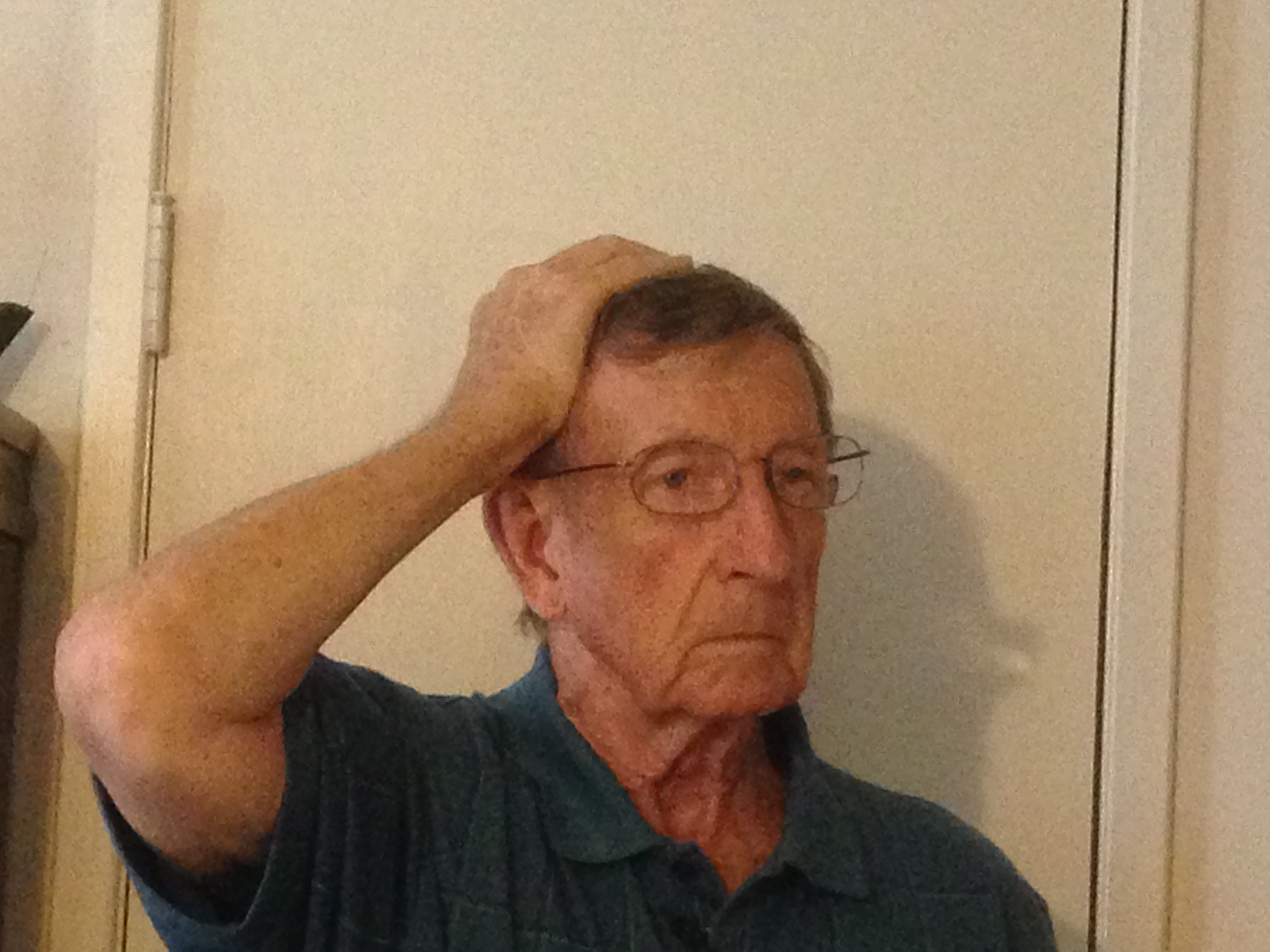
    1. Start by standing or sitting, facing forward and placing the heels and palms of your hands on your forehead. Push yourIMG_0285 hands against your forehead putting pressure on the front of your head and neck without moving your head. Hold for eight to ten seconds.  Start easy.  Don’t push too hard at first.  You can increase the pressure as your neck gets stronger over time.
    2. IMG_0286Looking straight ahead, put the palm of your hand against the side of your head and push against your head. Hold for eight to ten seconds.  Do the same thing with the other side.
    3. Looking straight ahead, clasp your hands behind your head and exert pressure against the back of your head. Hold for eightIMG_0287 to ten seconds.
    4. Variation: Exerting slightly less pressure, move your head against the pressure of your hand(s) for the full range of motion in each direction.  Do this five to seven times in all four directions.


    Neck Rotations:

    Stand up or sit looking straight ahead.  Lower your head toward your chest and bring it back to straight ahead.  Repeat three times.  Then bend your head backward as far as you can and repeat three times.  Then tilt your head to one side and then the other side.  Repeat three times.  Then rotate the head down, to the side, to the back, the other side, and back to the front.  Repeat three times in each direction.  You should hear some crackling sounds when you rotate your head.  Don’t be alarmed.  But if there is sharp pain associated with the head rotation . . . stop, and get it checked out.


    Head and Neck Raise:

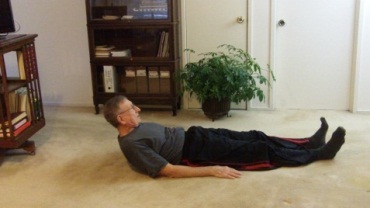
    Lie on your back, legs straight or bent, arms at your side.  Use a small pillow or book or even a yoga block to support your head if Head and Neck Raisenecessary.  Lift your head and shoulders up and forward slightly.  This should force your lower back into the floor.  Hold the position for three seconds.  Lower and repeat five to ten times. This will strengthen the muscles in the front of your neck.  An added benefit is that it will help tighten your abdominal muscles since it is a variation on the basic abdominal “crunch”.  Take your hand and feel the front of your neck as you do this movement and you will feel the muscles as they work for you.

    Your can expect a little strain and soreness when you first do these.  Unless there is sharp pain, the soreness should disappear.  If it is very sore, lay off the exercises for a few days, then start again.

    Don’t do any of the movements if you have had recent major neck or upper spinal surgery.  Always check with your doctor for any abnormal pain in your neck.

    Your neck muscles can easily be strengthened and made more flexible if you work on it.  You can be less susceptible to neck injury if in a car accident or if you fall.

    You don’t have to make a big deal out of doing neck exercises.  Just include a few in your exercise program.  If you do the exercises and movements that I have suggested in this and the last two articles, you should be well on your way to a better prepared physical infrastructure.  All the basic infrastructure exercises I have suggested in these three articles combined should take no longer than ten to twelve minutes total to complete.

    Thanks for reading.